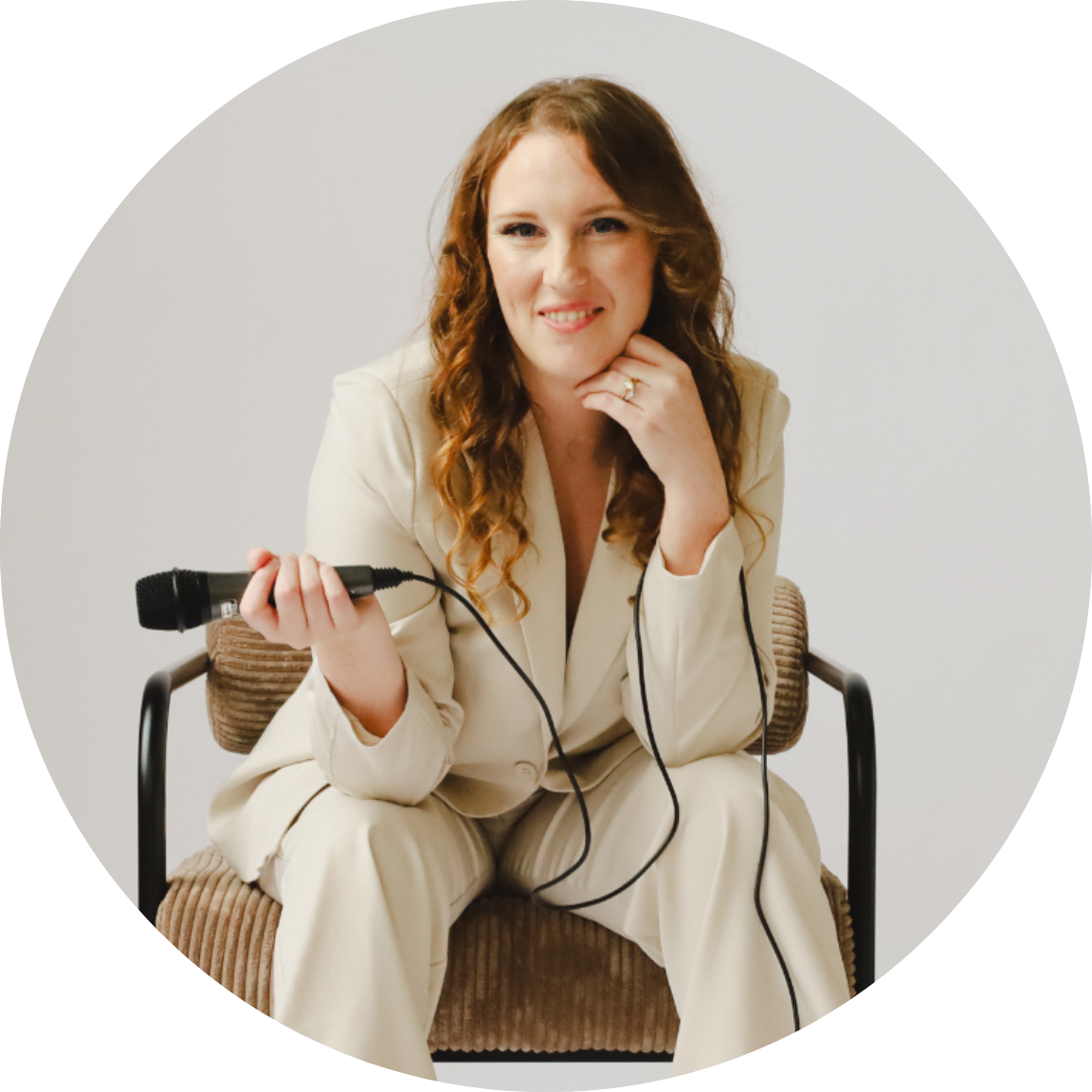
By Brigid Tebaldi, Nervous System Coach for Female Leaders
Brigid is a 2026 Power Table 100 Community Builder Award honoree — recognized for the women she’s quietly helped heal, lead, and come back to themselves.
It was 4pm and the house was finally, unbearably quiet after a full day of noise and notifications and someone needing something every other minute. The kids were outside. Work was technically done. I’d even had the kind of client calls that remind you exactly why you said yes to all of this in the first place.
Then I remembered dinner and opened the refrigerator.
I stood there long enough to make the power company very happy — staring at a full fridge, completely unable to decide what to make. I had made so many decisions by 4pm that my brain had quietly closed up shop and gone home without telling me. Every fiber of my being said takeout. I threw something together anyway, because that is what women like us do. We figure it out.
What I actually wanted was DoorDash and something mindless on the couch. And the second I noticed that, I felt guilty — because I love my people and I love my work. So what exactly was my problem?
I was tired in a way that had nothing to do with sleep. If that resonates, keep reading. What you’re feeling has a name, and it isn’t burnout.
Meet the Woman Teaching High-Achieving Women to Heal at the Root, Brigid Tebaldi

Brigid Tebaldi is the founder of Loreto Wellness and a board-certified health coach specializing in Spiritual Somatic Rewiring — a framework that combines nervous system repair, subconscious belief work, and the truth of Scripture to create lasting change at the root level. She’s also a wife and homeschooling mom of five, which means she isn’t teaching this from a whiteboard. She’s living it.
Brigid works with entrepreneurial mothers who are building remarkable things, raising their children with intention, and quietly wondering why it still feels this hard. In 2026, she was named to The Power Table 100 as a Community Builder Award honoree — recognition for the kind of behind-the-scenes work that doesn’t trend but changes lives.
The Tools Are Good. They’re Just Treating the Smoke.
Research from the Founder Burnout Index found that 40% of female entrepreneurs experience burnout compared to 27% of men — and the gap keeps widening. But even that number doesn’t capture the woman making dinner, answering emails, showing up for her kids, and feeling nothing at the end of a day that looked successful on paper.
So she does what any resourceful, high-achieving woman does. She goes looking for a solution. She downloads the app. Buys the journal. Starts a new morning routine. Learns about cortisol and cold plunges and nervous system regulation. And for a little while, it helps.
Until it doesn’t.
The tools are good. But they’re treating the smoke while the fire keeps burning underneath. When a woman has spent years — often decades — carrying wounds, no amount of box breathing is going to touch what lives that deep. You cannot regulate your way out of something that was never about regulation in the first place.
Here’s why the exhaustion goes deeper than any productivity system can reach, what’s actually happening beneath the surface, and what it looks like to finally heal at the root.
Step One: Stop Pruning the Trunk. Look at the Roots.
Most personal development works at the level of the behavior — the over-delivering, the people-pleasing, the inability to rest without guilt. The stuff you can see. So women hire coaches, read the books, start the new habits, and six months later land in the exact same place wondering what’s wrong with them.
Trust me, I’ve been there and hired that. I spent so much money chasing a strategy when what I actually needed was to be authentically me.
Every exhausted high-achieving woman is living from one of two trees. The Tree of Disorder grows from a wound — its roots are fear, shame, and the belief that love has to be earned. The Tree of Steadiness grows from identity — from the deep knowing that she is loved before she produces a single thing. Both trees can look successful from the outside. Only one of them can actually sustain her.
Action step: The next time you catch a behavior you can’t seem to change no matter how hard you try, get curious instead of critical. Ask: what does this behavior think it’s protecting me from?
Step Two: Name the Wound.
Most women know something is off. They feel it in the body — the chest that tightens before a hard conversation, the way a certain tone of voice from their husband sends them spiraling. But no one ever gave them language for it. So they call it anxiety. Or being too sensitive. Or “just a bad day.” (Or, heaven forbid, someone tells them they’re hormonal. Gasp.)
What the body is actually doing is remembering. A smell, a sound, a tone of voice, a look on someone’s face can pull the nervous system straight back into a childhood moment that never fully finished processing. The body stored it even though the mind moved on. The wound stayed — and it’s been running the show ever since.
Before anything can truly change, you have to be able to name what happened and find the core memory underneath the pattern. Not to relive it. To finally give it language. What has a name can be brought into the light. And what’s brought into the light can be healed.
Action step: Think of one pattern that keeps repeating no matter what you try. Now ask: when is the first time I remember feeling this exact feeling? That memory is the beginning of the map.
Step Three: Rewire the Memory — Then Regulate.
Once the wound has a name and the core memory has surfaced, the real work begins.
Most programs start with regulation because it feels good and produces quick wins — breathwork, cold plunges, journaling, somatic exercises. Again, those tools aren’t bad. But when you regulate before you rewire, you’re teaching a woman to manage a smoke alarm without ever putting out the fire.
Rewiring means going back to the specific sensory details of the core memory — the tone of voice, the smell of the room, the look on someone’s face — and changing how the nervous system has learned to respond to those cues. When the body no longer reads those triggers as danger, they become irrelevant. That’s when regulation finally makes a difference.
The order matters: awareness, naming, rewiring, then regulation as needed.
Action step: Identify one sensory trigger that reliably sends you into a stress response — a certain tone, being interrupted, someone leaving you on read. Just name it for now. You’ve found a door.
What Root Healing Actually Looks Like: Meet Emanuela
Let’s walk through how this process worked for Brigid’s client, Emanuela.
Emanuela is a homeschooling mother of three and a speaking coach — the woman who has it very together, and was still waking up every morning with that low hum of anxiety. She’d tried prayer, which gave some relief. Breathing. Working harder.
In our second session, she found the root underneath the anxiety she’d been carrying for years. When it surfaced, she said it felt like a weight she hadn’t even realized she was holding just quietly left her body.
What she didn’t expect was where the healing showed up afterward. Not only in her own nervous system, but in her marriage. In the way she mothered. In the conversations she could finally have without her body bracing for impact.
That’s what root healing does that symptom management never could. It doesn’t just change how she feels — it changes how she lives.
Where to Start This Week
Before you download another app or start another morning routine, sit somewhere quiet and ask yourself one question: what is the feeling I keep trying to outrun? Not the behavior. Not the habit. The feeling underneath it.
Write it down. Give it a word — anxious, invisible, never enough. Whatever surfaces first is usually the most true.
Then ask: when is the first time I remember feeling exactly this way? Let yourself go back without judgment and without trying to fix anything yet.
That’s the beginning of the map. From there, you need someone to help you find the root and rewire what’s been running underneath it.
When you understand what you’re really tired of — not the schedule, but the wound beneath it — you stop managing symptoms and start healing the thing that was driving them all along. You cannot regulate your way out of something that was never about regulation. But you can heal it.
You weren’t built to be this tired. And the fix isn’t more sleep. It’s deeper than that.
Guest Writer: Brigid Tebaldi
Brigid Tebaldi is the owner of Loreto Wellness — a wife, homeschooling mom of five, and board-certified health coach specializing in Spiritual Somatic Rewiring, a framework that combines nervous system repair, subconscious belief work, and the truth of Scripture to create lasting transformation at the root level. She works with entrepreneurial mothers who are building remarkable things, raising their children with intention, and can’t figure out why it still feels this hard. A 2026 Power Table 100 Community Builder Award honoree, you can find her at loretowellness.com or on Instagram @brigid.tebaldi.