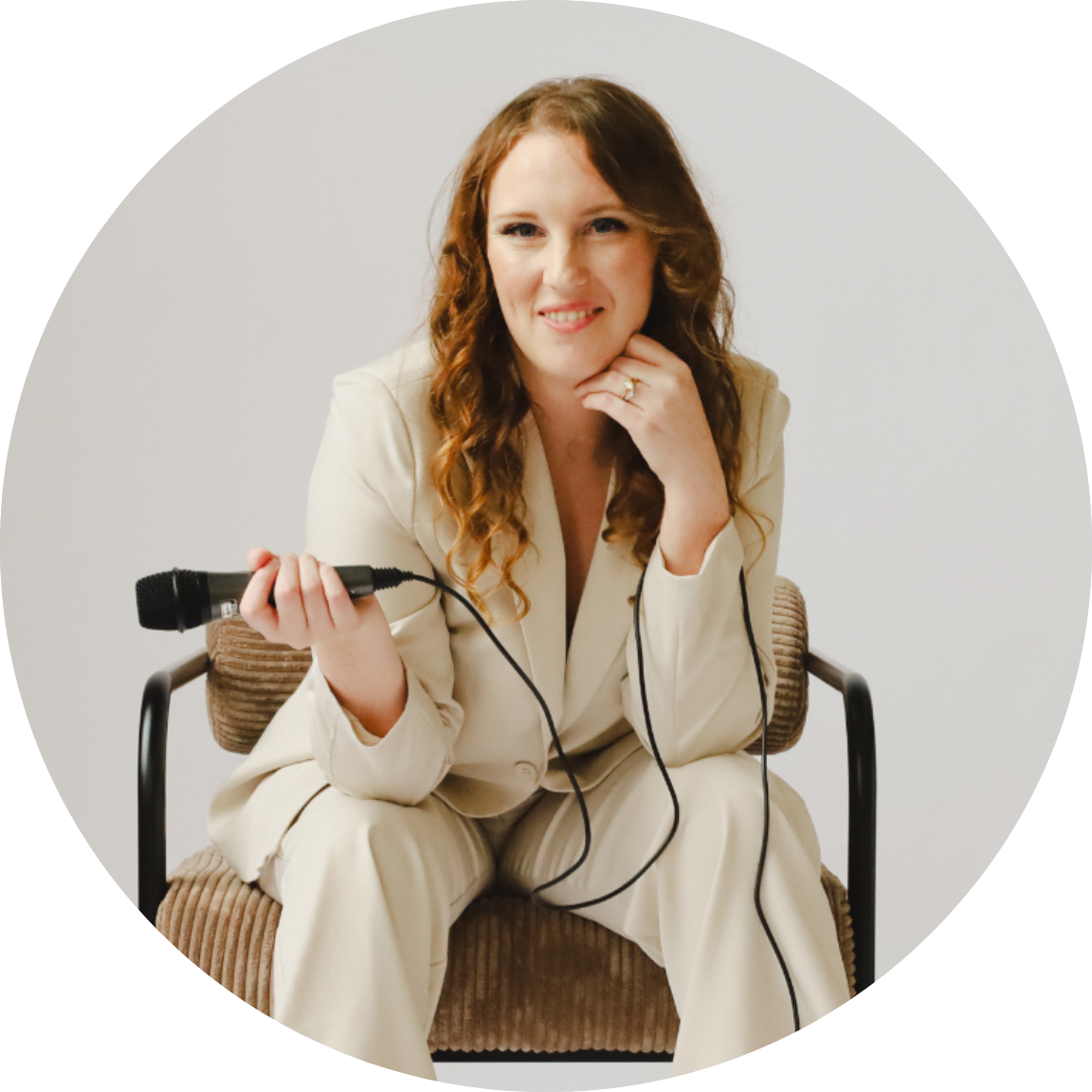
By Erin Perkins, Creator of Successible, the Accessibility Assistant
Erin is a 2026 Power Table 100 Social Impact Award winner — recognized for making digital accessibility something every small business owner can actually do.
As someone who identifies as Deaf, the online business world felt like the easiest place for me to start. My first business was built on online business management and graphic design — work I’d already done in corporate, with the fewest barriers. Easy access online, most communication through email, the relay to talk with clients. No problem.
Until I wanted to learn how to grow a business from other small business owners. That’s when I ran straight into the barriers.
When you’re deafblind, missing transcripts and captions isn’t a minor inconvenience — it’s a wall. And I started to notice that most small businesses simply didn’t know better. In school and corporate, accessibility had always been handled for me. Out here on my own? Nobody was handling it. So I started researching digital accessibility, and quickly realized how complicated the whole thing was.
What began as a mission to make accessibility easy turned into three business models, four hard lessons, and eventually a software tool that 46 people bet on before it was even built. Here’s what I learned along the way — and what I’d tell you before you build your next thing.
Meet the Deafblind Founder Making Accessibility Human, Erin Perkins
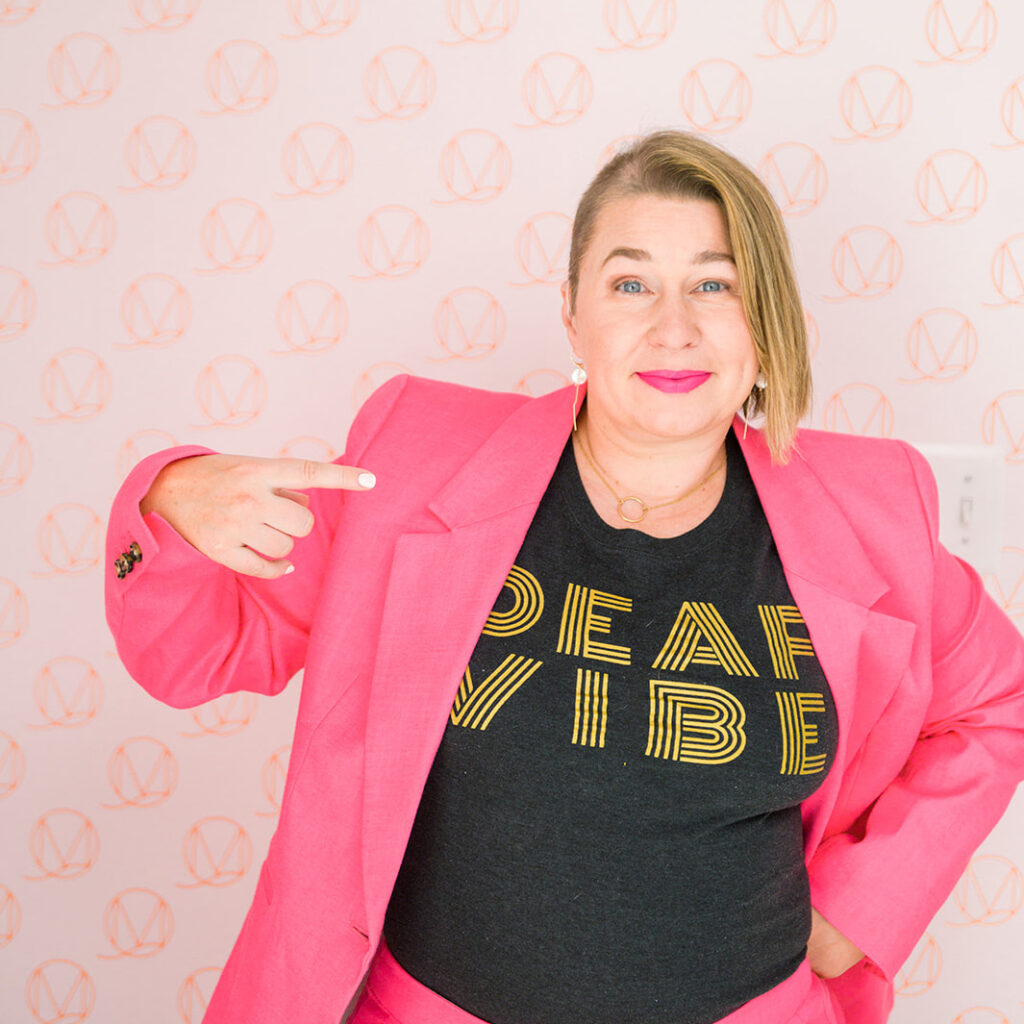
Erin Perkins is a deafblind entrepreneur, the founder of Mabely Q, and the creator of Successible — a Chrome extension that works like a spell-checker for accessibility, helping small business owners catch issues before they publish. After years of building courses, memberships, and consulting around digital accessibility, she channeled everything she learned into a tool that meets non-technical business owners exactly where they work.
In 2026, Erin was named to the Power Table 100 as a Social Impact Award winner — recognition for insisting that accessibility belongs to everyone, not just the design team, and for building it in a way regular business owners can actually use.
The Course: A Lot of Work, and My First Hard Lesson
My mission became simple: let’s make accessibility easy. I built a course called Accessibility Made Easy — writing the rules in plain language, scripting, filming, editing the captions, uploading, building out the whole thing. A ton of work. For a first course, it turned out great. What it didn’t do was make me six figures, the way the online world had promised it would be “easy” to do.
With little business background, I made plenty of mistakes. And here’s the thing about mistakes — if you’re not making them, you’re not growing. But one of them stuck with me for four-plus years.
I was invited to put my course inside a bundle. It sounded like a no-brainer: people buy the bundle for $99, my course is included, and I earn 70% affiliate commission. Here’s what actually happened:
More than 200 people opted into my course through that bundle. I earned $0 in commission. The offer had to stay open for a full year per the contract. And I lost close to $30,000 in revenue.
Here’s what I missed: commission was only earned through your own affiliate sales. If your list was small, you were essentially donating your course to someone else’s audience. My list was small. I didn’t earn a dime. And I’d handed over the entire course, when I should’ve offered a taste.
What I’d tell you now: don’t give away your whole product — offer a sample that funnels people back to you. Read the access terms and think through what they mean long-term, not just whether they sound reasonable on paper. And if your list is small, affiliate-only structures often won’t work in your favor; I’d now advocate for a profit split among all contributors, not just the top promoters. These days I rarely say yes to bundles or summits, even though they’re low lift, because my audience isn’t necessarily there.
The Membership: When I Didn’t Trust What I Already Knew
Later that year I started working with a coach who believed in my accessibility mission. She helped me build my SUCCESS framework, and then talked me into building a membership.
I was resistant from the start. I already knew what content creation took, and I didn’t believe I could consistently produce new videos and material on the schedule a membership demands. I wish I’d trusted that instinct.
I built it anyway. It landed around 20 students. I started it as an annual cost and eventually converted it to lifetime access.
The lesson wasn’t really about the membership model. It was that I should’ve built a bigger, more substantial offer instead of a lower-priced one. Trust what you know about your own capacity — that knowledge is data, not doubt.
The Consulting Years: Learning What I Didn’t Want
The membership opened doors I didn’t see coming. It led to a partnership with another accessibility expert to pitch a membership platform — a high five-figure contract — and to being tapped to consult with an accessibility consulting company for two years.
That consulting work was invaluable. They served corporate and government clients, a completely different audience than mine, so I never saw them as competition. It gave me a front-row seat to the tech-heavy side of accessibility — and it confirmed exactly where I didn’t want to go. I wanted to stay on the human side. I wanted to show small businesses that you don’t need a complicated, heavily coded website that takes a whole team to maintain.
I’d originally hoped to build something bigger with that company’s CEO, but they had other plans, and eventually the business closed. What I took from it: knowing what you don’t want is just as valuable as knowing what you do. Those two years didn’t just teach me about accessibility — they taught me about myself as a business owner.
The Lost Quarter: When I Wanted to Burn It All Down
After losing that consulting income, one thing was crystal clear: I loved teaching. The consulting had shown me that. I loved helping people apply simple accessibility practices inside their companies and proving it wasn’t only the design team’s job — it was everyone’s.
But I spent the last quarter of 2024 feeling completely lost. I kept building offers around teaching accessibility while everyone told me the real money was in corporate. My funnel was thin: a social media accessibility scorecard as a freebie, the Successible membership, and one-on-one consulting. I was pitching myself into other people’s memberships to teach for free, hoping they’d hire me afterward. A lot of output for very little return.
By the first quarter of 2025, I genuinely wanted to burn the whole company down. I was done. 2020 to 2025 has been brutal on small online business owners — IYKYK. And I kept watching the same tired cycle play out: sell a course on how to build a course, sell a funnel on how to build a funnel, and now sell an AI system on how to build an AI system. It’s a pattern, and I’m working hard to stay out of it.
What kept me in the game was community. I’m part of the Dot ConnectHer community led by Mikki Wilson — a refreshing group of women all doing very different work, all trying to change the world in their own way. I told them I was frustrated, that nobody was working with me, that I wanted to torch the whole thing. And Mikki said: just keep pushing through. Don’t burn it down. Keep showing up.
The Pivot: Asking a Better Question
Then something shifted. I attended AI Unlocked in May 2025 and started asking a different question — not “what do I do with accessibility,” but “how do I give myself a competitive edge?” I started learning from women using AI in their businesses, like Laura Kendrick of Cheeky Copy and Shawn Every of Ask AI with Shawn. That’s when the idea for a micro tool began to take shape.
I started playing with building an accessible tool using AI. But the more I talked with my audience, the clearer it got: they didn’t want something with AI. They wanted something more.
I went looking for a developer. The first call shot my idea down pretty quickly. So I put a call out to my network and got introduced to a team called Softvoya — and from there, we built exactly what I’d envisioned. It’s moved slowly compared to how fast other platforms seem to launch. But I built this SaaS with humans, and I’m so glad I did. It’s more controlled, it covers gaps AI would’ve missed, and I’ve learned an enormous amount by working alongside people who are experts at building software.
Here’s what building Successible produced: 46 founding members signed up between November 2025 and March 30, 2026 — all of it driven by just six demos, before the tool was even fully built. They were buying on concept alone. Successible launched April 1, 2026.
In hindsight, I’d have extended the lifetime offer through launch so people could actually test the tool before deciding. But 46 people betting on a concept told me everything I needed to know about whether this was the right model.
What I’d Leave You With
We all want things to move fast, and life rarely cooperates. It took me three business models to really learn that. So here’s what I’d pass on:
Know your full funnel — from your freebie all the way to your top-shelf offer. It doesn’t have to be a five- or six-figure number. Understand the customer journey, and accept that it takes time; getting someone from a freebie to working with you doesn’t happen overnight. My own path went from a free scorecard, to a course, to one-on-one consulting, to a membership, and finally to a SaaS tool — and each one taught me something I needed for the next. Map it out before you build the next thing.
The right model is worth the wait. It took me five iterations and a near-burn-it-all-down moment to find mine — and every detour was teaching me something the next version of my business would need.
So what are you building? What iteration of your business are you on? I’d genuinely love to know — because if my journey has shown me anything, it’s that the right model is worth waiting for.
Guest Writer: Erin Perkins
Erin Perkins is a deafblind entrepreneur, the founder of Mabely Q, and the creator of Successible — a Chrome extension that works like a spell-checker for accessibility, helping small business owners catch accessibility issues before they publish. After years of building courses, memberships, and consulting around digital accessibility, Erin channeled everything she learned into a tool that meets non-technical business owners exactly where they work. A 2026 Power Table 100 Social Impact Award winner, you can find her at mabelyq.com or on Instagram @mabely_q.