by The Power Table Team
Every year there’s a new tool promising to replace allll the others.
AI has only sped that up. New platforms launch, new algorithms shift what performs, and business owners just trying to do their thing and serve their clients well end up scrambling to keep pace, worried that whatever they built last year is already outdated.
In the middle of all that noise, one channel has quietly outlasted every prediction that it was finished. Email marketing.

It’s easy to write off. It’s not new. It doesn’t have the flash of a viral reel or the immediacy of a DM.
Some business owners assume their audience has stopped checking their inbox altogether.
But email marketing will continue to outperform all other marketing tools and trends for one main reason.
It’s the one channel you actually own. Your list isn’t subject to an algorithm change overnight, and it isn’t rented space on a social media platform.
So if email marketing still works this well, why does it feel broken for so many business owners? The honest answer is usually not the strategy. It’s the platform running it.
So let’s talk about what we use specifically at The Power Table, our email marketing platform of choice, Kit!

Why this still matters, especially now
The temptation right now is to chase whatever new AI tool just launched, assuming the old, proven channel has quietly gone obsolete while everyone was looking elsewhere. That assumption costs business owners more than they realize.
Email marketing hasn’t lost its power. If anything, AI has made it sharper and easier to send great emails that connect and convert to sales than it’s ever been, from smarter subject line testing to automations that used to take a developer and now take a few clicks.
There has never been a better moment to actually use this channel the way it deserves to be used, instead of leaving it running on autopilot with none of the strategy it needs.
Here at The Power Table, email marketing has always been a deliberate part of how we communicate. We treat it with the same intention as everything else in our marketing, because when it’s done well, it still outperforms almost every other channel available to a founder-led brand.
But intention only gets you so far if the platform underneath it can’t keep up. And that’s where most business owners run into trouble. It all stems down into a systems problem.
How to pick the right email marketing platform for your business as a coach, agency owner, or service provider
The platform you choose affects how well your emails actually reach the inbox instead of getting buried in spam. It determines how easily you can speak to different segments of your audience instead of sending the same message to everyone. It decides how much manual work falls on you every time you want to follow up with someone who took a specific action.
And it sets a ceiling on how far your list can grow before the platform itself starts working against you instead of for you.
Think about how this plays out in practice.
A business owner picks a platform early on, when their list is small and their needs are simple. A few hundred subscribers, one newsletter a month, nothing complicated. The platform handles that fine.
But the business grows. The list grows.
The number of different offers, programs, and audiences grows with it. Suddenly the same platform that felt perfectly adequate at 300 subscribers is straining under the weight of 5,000, and nobody made an active decision to let that happen.
It just accumulated, one unaddressed limitation at a time, until the platform became the ceiling instead of the foundation.
Try Kit with up to 10,000 email subscribers for free today!

The signs you’ve outgrown your platform (or chose the wrong one from the start)
If email marketing has started to feel like a struggle, or like a channel you’re using without really seeing the results you expected, it might not be your strategy at all. It might be the platform underneath it.
A few signs worth taking seriously:
- Declining open rates that don’t have a clear explanation. You haven’t changed your subject lines or your sending frequency, but fewer people are opening what you send. That’s often a platform-level deliverability issue.
- Manually building email list segments that should be automatic. If you’re exporting lists, cross-referencing spreadsheets, or hand-picking who receives which email every single time, the platform isn’t doing the organizational work it should be doing for you.
- You dread sending each email because setup takes too long. A good platform makes sending an email feel simple. If every send requires a mental gear-up because the process is clunky, that friction is costing you consistency, and consistency is what actually makes email marketing work.
- Growth being capped by pricing tiers that punish list size. Some platforms charge more the moment your list grows, which quietly discourages you from actually growing it. Your email tool should scale with your business, not tax you for succeeding.
If any of these sound familiar, sending better emails isn’t going to fix all of these. It’s questioning whether the system holding it together was ever built to support you in the first place.
What good email management actually looks like
So what does it actually look like when the platform is doing its job? A few signs worth measuring yours against:
- How the platform organizes subscribers. The difference between tags and traditional lists matters more than it sounds like it should. A list-based system can put one subscriber on multiple lists, which means duplicate emails, irrelevant sends, and a messier picture of who’s actually in your audience. A tag-based system keeps every subscriber as one record, organized by what they’ve actually done, so you can target with precision instead of guesswork.
- Automation that runs without manual labor. Once it’s set up, a good automation should require nothing further from you. A new subscriber should get welcomed, nurtured, and moved toward the next step automatically, without anyone on your team remembering to trigger it by hand.
- Deliverability that holds up as your list grows. A platform that performs well at 500 subscribers and falls apart at 5,000 isn’t a platform built for where your business is headed. Deliverability should get better with scale.
- Pricing that scales sanely. The cost of growing your list shouldn’t feel like a penalty. A platform built for business owners who plan to actually grow should price accordingly.
Why we love Kit for email marketing
All of the criteria above are genuinely attainable with the right platform, and at The Power Table, Kit is the one tool that fulfills that list for us.
On the design side, Kit keeps email creation simple. The interface is clean, and building an email doesn’t require design experience or a steep learning curve. You can also test multiple subject lines and body content variations to see what actually drives the highest open and click rates, instead of guessing and hoping.
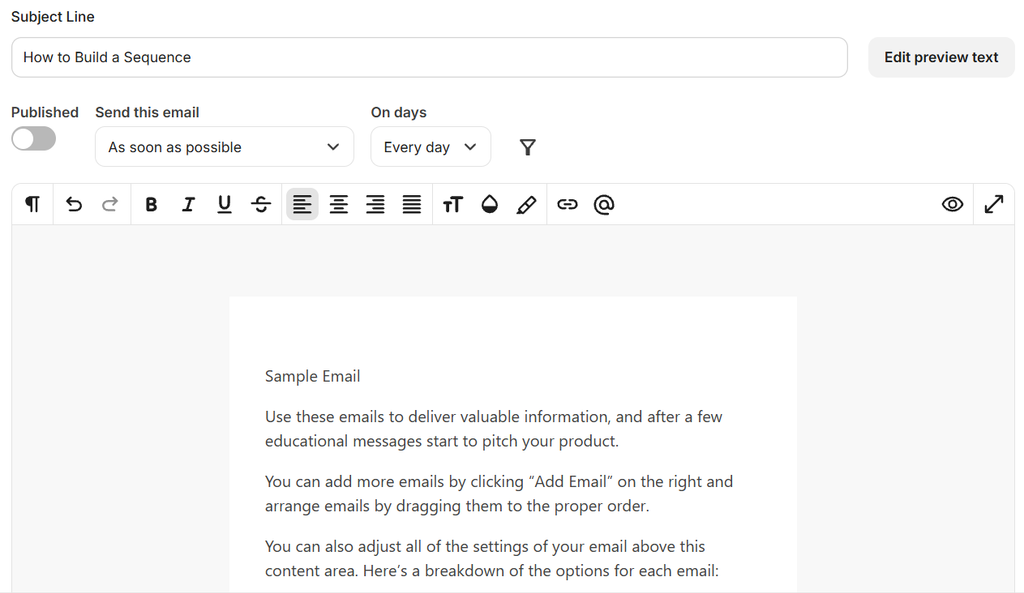
Organization runs on tags and segments rather than traditional lists, which means full control over exactly who receives which email.
A podcast listener, a Power Table LIVE ticket holder, and a Mastermind member can all be tagged differently and followed up with in a way that’s actually relevant to them, instead of one blanket message going out to everyone at once.
This has been one of the biggest changes to our email marketing strategy is sending by segment and interest, instead of sending every email to our entire list!
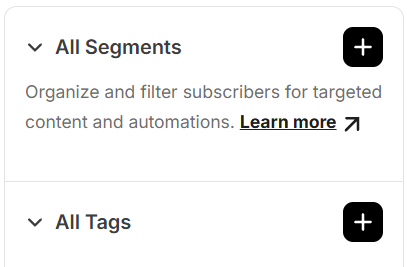
Automation is where Kit does its heaviest lifting. The platform includes email templates and reusable snippets, and building a fully personalized sequence for your brand doesn’t require starting from a blank page every time.

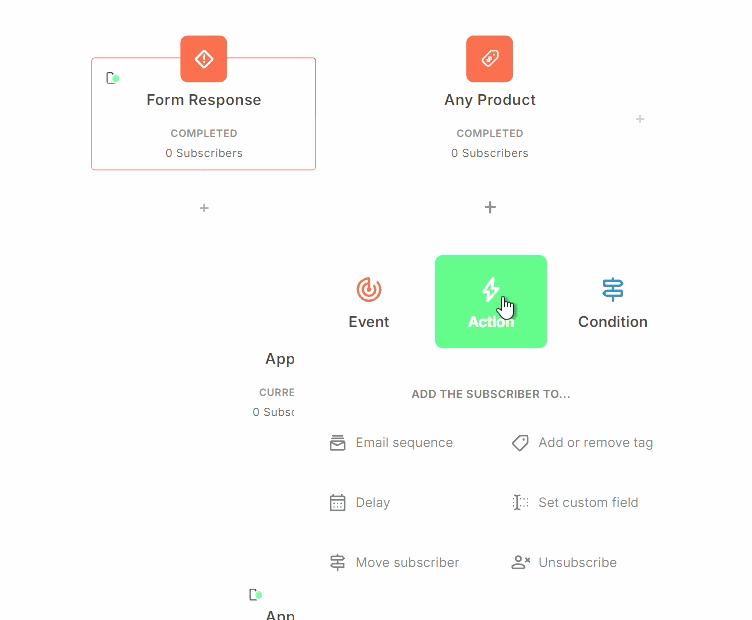
Welcome funnels and multi-email onboarding sequences can run entirely on autopilot once they’re built, so a new subscriber gets the right emails at the right time without anyone on the team remembering to send them manually.
Why this matters especially for business coaches
If you’re a business coach, your email list is often the most direct relationship you have with your audience.
It’s where a subscriber goes from casually following you to actually considering working with you, and that relationship depends on the emails actually arriving, actually being relevant, and actually reflecting the same quality your brand promises everywhere else.
A platform that organizes your list well and automates your follow-up is infrastructure, the same way a good CRM or a reliable course platform is infrastructure. When a lead downloads your freebie and doesn’t hear from you for two weeks because nobody remembered to check the list, that’s a warm lead going cold because the system behind your marketing wasn’t built to catch her.
The coaches who make email marketing actually work in 2026 are the ones whose systems make sure the right email reaches the right person automatically, every time, without depending on someone remembering to hit send.
The bottom line
Choosing the right platform for email marketing changes the outcome in more ways than most business owners expect. AI has made our tools sharper and our strategies more efficient across the board, but the best move isn’t always chasing whatever launched most recently.
Sometimes it’s using what already works, and using it to its full capability.
Email marketing has always worked.
It doesn’t need to be replaced or reinvented every time a new trend appears.
It needs the right system underneath it, one that organizes your audience intelligently, automates the follow-up you’d otherwise forget, and scales alongside your business instead of taxing its growth.
It’s the same and classic strategy that’s worked for decades. We just have to build it on a platform actually capable of running it the way it deserves to be run.