By Taylor Smith, Founder of The Power Table, with special guest Steph Rubio, Power Table LIVE 2026 Speaker
Including excerpts, advice, & input from additional contributors:
- Jordan Gill, Systems Strategist, Educator, Podcaster, & Founder of Systems Saved Me
- Michelle Thames, Event Host, Marketing Strategist, & Community Builder
- Megan Kozell, MSW, RCSWI, Founder of The Balanced Boss
- Lauren Najar, Agency Founder, Business Consultant, Speaker
Everyone’s attending events.
Everyone’s also hosting them. Is that causing problems for attendees?
There’s a reason in-person events are having a resurgence in the women’s entrepreneurship space. After years of living in our online bubbles, an increasing number of female founders are craving something deeper: real conversations, real connection, and rooms that actually move the needle.
And, in speaking from my personal experience at The Power Table, our conference, The Power Table LIVE, is also a place where women come in person to hire service providers and coaches, make new referral partners and friends, as well as find podcast guests and speakers for their own events and shows. Women are using in person events to assess trust for their potential collaborators and hires.
It sounds like a win-win for everyone.
But as events have surged back, so have the disappointments.
Overpromised experiences. Under-delivered results. Misaligned rooms that were nothing like what you thought you’d be walking into. Safety concerns no one warned you about. And an unspoken pressure — especially in women-led spaces — to “just support” other women even when something feels off.
That’s what sparked this conversation.
What follows is not gossip or criticism of specific events in the women’s entrepreneurship space. It’s an honest, nuanced dialogue between two community leaders – Taylor and Steph – who attend events, host events, speak on stages, and carry the weight of community trust.
We came to each other with this one question, “Hey, my community members are asking me about this particular event and I know it won’t have a good ROI for them because it’s not operationally sound, and this conversation is incredibly delicate because the last thing I want to do is gossip or put others on blast. Are you having the same conversation with your people? Can we have this together?”
This is a conversation about what it actually means to host, attend, and recommend events responsibly — and how both attendees and hosts can do better.
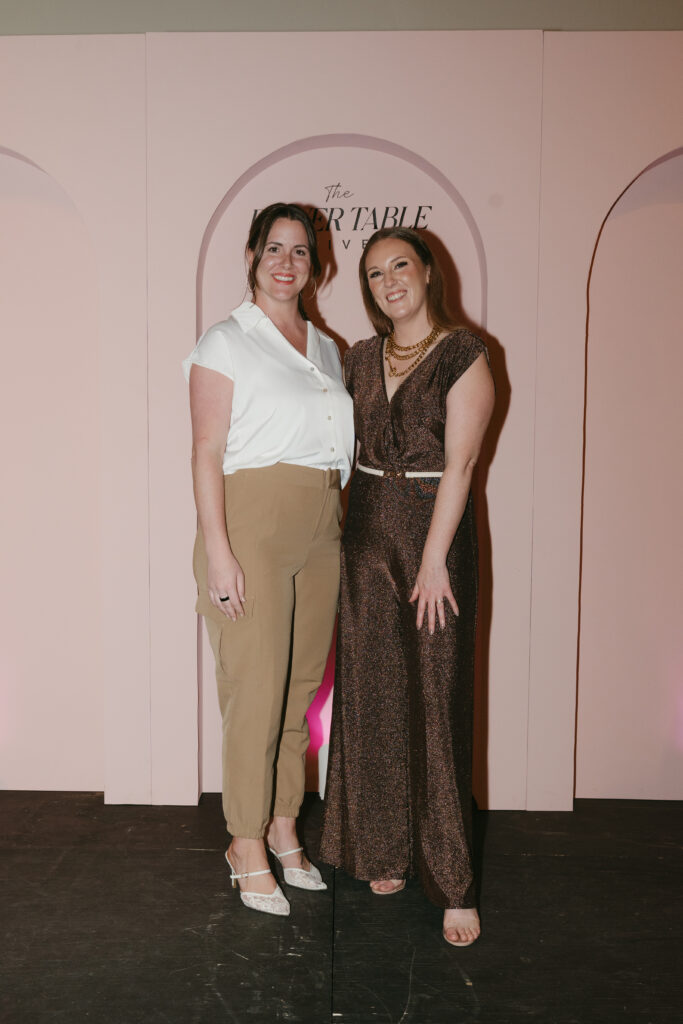
Meet the Writers:
Taylor Smith
I come to this conversation as the founder of The Power Table, a community builder, event host, and personal brand strategist who has spent years creating spaces where women connect, collaborate, and make real business decisions.
Through Power Table LIVE and our broader ecosystem, I’ve seen how in-person events have become one of the primary ways trust is evaluated — where women decide who to hire, who to collaborate with, what strategies to implement, and which rooms feel aligned.
Over time, I’ve become deeply aware of the weight that comes with visibility and influence: when I attend, speak at, or support an event publicly, people in my community often follow. This conversation grew out of that responsibility — a desire to talk honestly about what it means to host, attend, and recommend events with care, discernment, and respect for the real sacrifices people make to be in the room.
Steph Rubio, Guest Contributor
This conversation wouldn’t have felt complete without Steph Rubio.
Steph Rubio is a community leader, strategist, and trusted peer whose work centers on integrity, execution, and responsibility at scale. With nearly two decades of experience spanning operations, sales, client experience, strategic planning, and leadership — including an almost–VP of Operations role she intentionally walked away from — Steph brings an executive-level lens to the conversations many founders avoid. She is the creator of the Rooted & Relentless ecosystem, a podcast and community for gritty, highly capable entrepreneurs who want to build businesses by design, not accident.
At Power Table LIVE 2026, Steph will be speaking and her session is titled:
Your Reputation Is Your Revenue: Client Experience Is Out, Stakeholder Experience Is In
It’s a topic she doesn’t just teach — she lives it. Steph is known for helping founders zoom out beyond transactions and funnels to examine the full ecosystem their decisions affect: clients, teams, collaborators, partners, and communities. That lens is exactly why this conversation mattered so much to both of us.
Why This Conversation Matters Now
“It only took one disappointing event for me to completely change how I approach events. One.”
–Steph
For many women business owners who attend events, events aren’t casual decisions. They’re calculated sacrifices — time away from family, time away from clients or sales in their business, the emotional energy spent showing up vulnerable in unfamiliar rooms.
“Every event is someone’s sacrifice in another area of their life. When it’s done well, the payoff is massive. When it’s not, the consequences are real. Attendees pay the price of a bad event.”
-Taylor
And yet, very few people are willing to talk openly about what doesn’t work — because it can feel like criticism, disloyalty, or “not supporting other women.”
This conversation exists because silence isn’t serving anyone. So let’s get into it…
Let’s Start With the Event Red Flags No One Talks About
Most people can’t always articulate why an event feels off — but they feel it anyway. You may have looked at an event online and thought while you knew people who were going, or the content looked great, you just felt hesitant to buy a ticket.
As we began to brainstorm this conversation, one of our biggest goals is to help educate you on how to choose a high quality event and avoid an event that can’t or won’t deliver on their promises. One key strategy is to do your research ahead of time and carefully assess the event’s marketing, content, sales pages, and promises and look for the red flags.
Here are the red flags we both see repeatedly that indicate an event might not be able to deliver on their promises:
🚩 1. The Math Doesn’t Math
If an event promises 200 people in the room but has never hosted even 20 in person, that’s not ambition — it’s misrepresentation and can even be considered fraudulent advertising.
“It’s not okay to tell people you’ll have 150 or 300 attendees when you’ve never even had a tenth of that show up live, in person. Overinflating attendee numbers or overestimating a first time event is a pervasive and wildly unethical problem in the event industry. I’ve seen people with 250k followers not be able to fill a room in person with 50 people.”
-Taylor
As an attendee, don’t look at social media following or views to support their claims. Instead, look for real proof that they’ve had in person events in the past.
But it’s also important to say, first-time events aren’t the problem. Skipping the build-up is.
“A green flag is seeing smaller events, community building, and iterations before a big conference.”
-Taylor
The more effort a new event host is putting into community-building, the better your event experience is going to be, especially at a first time event. When event hosts jump from 0 to hundreds of attendees, chances are it’s a major red flag because they don’t have the experience to market or execute that.
🚩 2. Vague Transformation Language
Buzzwords without specifics are a huge warning sign.
“If your transformation isn’t clear and you’re leaning on words like ‘clarity’ and ‘confidence’ — I’m out.”
-Steph
Attendees deserve to know exactly what they’re walking away with.
As an attendee, event hosts should be giving you a clear transformation and result that you’ll walk away with at the end of the event. And this clear result should come in two forms:
- The tangibles that you will learn (strategies, mindset shifts, tools)
- Who you will connect with
As an attendee, you want to know who you are going to be attending the event with (more on this later in the article and how you can ask the host about this).
🚩 3. Disorganized or Late Communication
If key details are missing months before the event, it signals deeper issues behind the scenes.
“If the sales page isn’t live months out, I start asking what else isn’t getting done.”
-Steph
If you see an event that’s claiming it will be massive and life-changing, but there aren’t clear and high quality sales pages months before, it’s also probably a red flag. As Steph said, “That scares me from an operations standpoint because if that one piece can’t get done, what else isn’t going to get done because the event host has probably over committed themselves.”
Even without buying a ticket, you can assess whether an event has disorganized or clear communication by looking at how much communication is available pre-event. If there’s very little information, a missing or minimal sales page, and very little content in general, it’s a red flag.
Questions Attendees Should Ask Event Hosts (But Rarely Do)
There is an incredible amount of responsibility on the event host — but attendees have responsibility as well to do their research and think through whether an event is clearly aligned with their goals or not. So, as an event host, I (Taylor) recommend that you actually ask the event host the key questions you feel are unanswered.
“If you can’t find the answers, ask. And if the event host can’t or doesn’t answer? That’s your answer. That’s not an event that is safe for you or your money.”
-Taylor
Key questions every attendee should be asking:
- Who is this room actually for?
- What stage of business are most attendees in?
- What are the outcomes I will actually get as an attendee?
- Is this education-focused, connection-focused, or inspiration-focused?
And then finally, there is one question that Steph and Taylor both agree every event attendee should be asking themselves before buying a ticket is, “How does this event support my pre-established goals for my business?”
“Everything in your business should ladder up to your goals. Events are no different.”
-Steph
A mistake we often see is people decide to attend an event based on the cute content on instagram and then create a goal for it. But it should actually work the opposite way. You want to make sure you can clearly connect attending this event to your business goals, whether that’s visibility, hiring, learning new skills, or connecting with others.
We also asked Michelle Thames, Event Host, Community Builder, and Marketing Strategist what question attendees should ask event hosts and here’s what she had to say:
“Most attendees ask who will be in the room, but not how the room is designed to support connection, safety, and follow-through. A more powerful question is: What systems are in place to help attendees actually build relationships, not just exchange business cards? That’s where real ROI lives.”
– Michelle Thames, Event Host, Marketing Strategist, & Community Builder
This question is invaluable because it also brings up a key point – a high quality event will support your continued connections and outcomes for months to years after the event and won’t leave it up to you to simply swap business cards and instagram profiles.
When It’s Smarter Not to Attend
Not every event is a good decision — even if everyone you know is going (sometimes especially if everyone you know is going).
This was actually one of our favorite parts of our conversation on this topic, and it turns out, several of our event host friends had strong feelings about this too. We asked them to share their thoughts on when someone shouldn’t attend, and here’s what they said.
“Attending an event is a business decision. It should never be a loyalty test.”
–Taylor
“I think the event has to align with what you want to get out of the event itself. You can attend an event for a number of reasons; visibility, relationships, signing clients or knowledge to name a few reasons. It can be very easy to attend an event out of FOMO or be wooed into the glamorous content but what I would encourage is to do your research if it’s going to fit one of your reasons to attend an event. You can totally attend an event for fun too, but make sure you are going to have fun and it’s fun for you!”
– Lauren Najar, Agency Founder, Business Consultant, Speaker
“If attending requires me to override my energy, values, or boundaries just to be in the room, it’s already a no. Popularity, FOMO, or “everyone will be there” isn’t a substitute for alignment or ROI. I’m more interested in rooms that respect my capacity, consent, and clarity than ones that trade pressure for proximity to power. That generally looks like attending events with less than 500 attendees.”
-Jordan Gill, Systems Strategist, Educator, Podcaster, & Founder of Systems Saved Me
Reasons to pause before purchasing that ticket:
- You’ve outgrown the room
- Your current goals won’t be supported there
- You’re attending out of FOMO or obligation
- The timing actively works against your priorities
- The expense of attending (tickets, travel, time away from your work) actively works against your budget and priorities
And, if you choose not to attend, there are still plenty of opportunities to be involved with an event host and their community.
“There are a lot of ways you can support someone without attending their event if the event itself doesn’t align with your goals and priorities like helping them to promote, recommending it to your clients or referral partners, or lending connections or your skills.”
–Steph
What Steph explains so clearly above is that even if attending in person isn’t in alignment for you with your goals or priorities, you can still look for other ways to connect with the host, provide them support, or develop relationships with their community.
How to Determine Whether an Event is Aspirational vs. Operationally Sound & Strategic
Not all events are meant to deliver tactical ROI — and that’s okay. The problem is when event hosts are not honest about which type of event they’re hosting.
We love a motivational, inspiring, activating event.
But that’s also a wildly different type of event than one that delivers strategic, tactical learning and high value connections and networking.
Those are two very different outcomes.
It’s a very frustrating feeling as an attendee when you purchase a conference or event ticket thinking you’ll be getting specific tangible results or meeting specific types of people only to get there and find out that was not true.
Fortunately, there are a few ways you can strategically research an event ahead of time to identify what kind of experience you’ll get and therefore make an intentional buying decision that can be directly tied to your goals.
One of my favorite ways to research tactical vs. inspiration events is to look at the ticket breakdown and study the VIP vs. General Admission tickets. Even if you don’t plan on buying a VIP ticket, look at the deliverables and see if they’re tactical and clearly defined.
“If your VIP ticket only offers better seats and swag — that tells me this is aspirational.”
-Taylor
If you want to walk away with tangible strategies and valuable relationships for your business, you want to make sure you invest in attending events that are operationally sound.
Operationally sound events typically include workshops and hot seats,
structured networking, fewer motivational talks. And, as Steph pointed out, look for pathways to access support before and after the event. A motivational event won’t likely have many touchpoints or support after the event ends. On the other hand, an event that has pre-event networking opportunities and post-event pathways such as a membership, accountability calls, offering slides or a workbook, or an offer to work with the event host further are all going to be signs of a more operationally sound and strategic event.
These are also signs that the event host has taken the full attendee experience into consideration and it’s not simply a matter of throwing an event for the vibes or to generate cash for the host.
Your Responsibility as an Attendee
Once you buy the ticket, your role matters. If you want to make the most of your investment, you’ve got to be in the room beyond just “being in the room.”
“Don’t use your phone at all while you’re at the event unless it’s like to grab content and still be mindful of that when there’s presentations going on and things like that. Be engaged and pay attention to the speakers because it’s also smart for your business and stay the whole time.
If an event host has said their event is from nine in the morning until five in the afternoon, that’s what you’ve now committed to, so stay for that. It drives me nuts to see people dwindle out of the room. It’s so disrespectful, to not only the event host but the speakers on stage. Especially the final speakers. Those last two speakers that you dipped out on or that last conversation or whatever the case, they also made time and effort to come pour into your business so stay present for them.
And then finally, fill out the feedback request forms! So many people skip this but it’s extremely helpful for the event hosts.”
-Steph
If the event is high quality and well planned, it’s very possible to walk out of the event with life-changing results for you and your business. But even at a great event, not everyone experiences this. A big part of that comes down to your own actions before, during and after the event.
“Your reputation is built in rooms like this. People notice everything. If you’re scrolling on your phone, why would I hire you, invite you to speak on my stage, or recommend you to my clients if you’re disengaged in person?”
-Taylor
Our advice is to make it your goal to be a stellar attendee! Read all the event communication, arrive on time, be open and vulnerable to new ideas, new ways of thinking, new people with different perspectives.
And, actively network and make new connections before and during the event and follow up after. Be thoughtful and intentional with how you make a first impression on people and in the way you continue to follow up and build relationships with people you meet at events. It’s not about being perfect or being the most established person in the room, it’s about being authentic and present and following through on your communication and commitments.
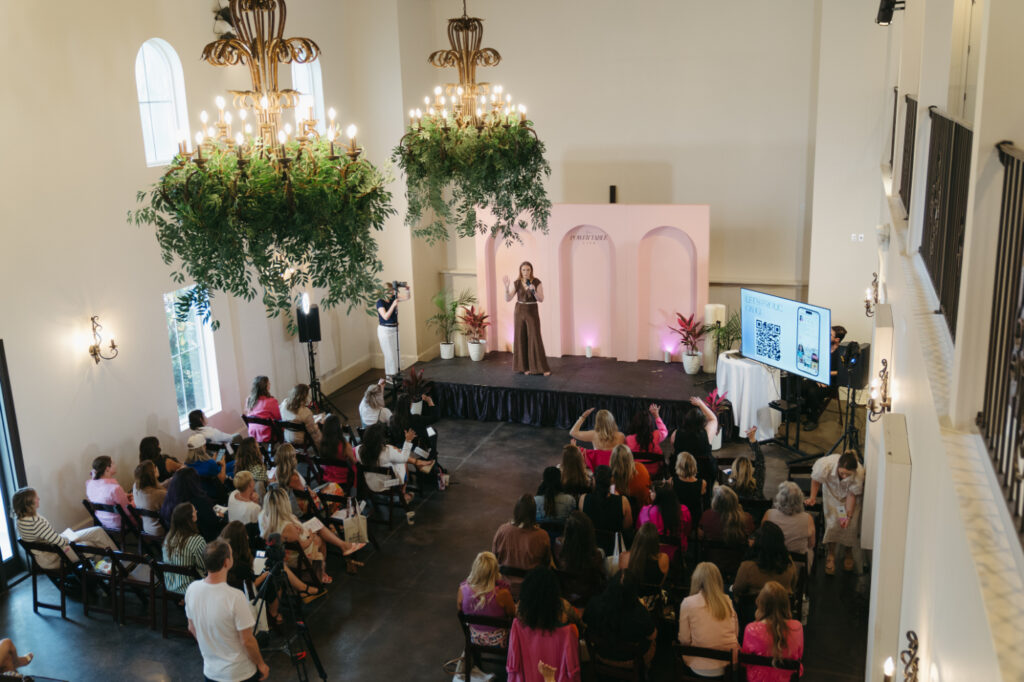
The Safety Conversation We Rarely Have But Need To
Alright take a deep breath with us girlfriends, because this is one of the most important parts of the events conversation and it’s so rarely talked about: making sure you are taking steps to protect your safety when attending events.
Physical safety. Emotional safety. Psychological safety.
“I’ve been in rooms where women were physically unsafe because the event host took money from a sponsor who turned out to be a sexual predator— and the worst part is that the event host knew about this person’s behavior and they allowed myself and other women to be in the room anyway. This is completely unacceptable.”
-Taylor
From harassment or assault at event bars and afterparties with drug and alcohol abuse to emotionally manipulative sales tactics disguised as “breakthrough moments,” these experiences are not rare — they’re just rarely talked about.
And unfortunately many of them cannot be anticipated or evaluated ahead of time.
People are highly variable in their behavior and some disguise their intentions. Some behave differently once power dynamics, alcohol, money, or access are involved. And not everyone operates ethically — even in spaces that are marketed as professional, empowering, or “safe.”
Especially in women’s entrepreneurship spaces, we want to believe the room itself is a safe space. Most of the time, it is. But sometimes it isn’t and pretending otherwise leaves people unprepared rather than protected.
This isn’t about fear or distrust. It’s about realism.
There are aspects of safety — physical, emotional, and psychological — that don’t show up on a sales page or speaker lineup. A venue can be beautiful and still be poorly staffed late at night or located in an unsafe area. A host can have good intentions and still overlook boundaries around alcohol or afterparties. A speaker can be credible on paper and still use emotionally coercive tactics in the room.
When those moments happen, the goal isn’t to ask, “Why didn’t I see this coming?”
The goal is to be able to say, “I trust myself to take care of me now.”
Physical safety concerns most often arise outside the main sessions — at bars, informal gatherings, or unstructured afterparties. Emotional and psychological safety concerns tend to surface inside the room, when vulnerability is encouraged without adequate care, consent, or context. Neither means you made a poor decision by attending. They mean you’re human in a space where not everyone shows up with the same level of responsibility.
And if something feels off — if your body tightens, your anxiety spikes, or your boundaries suddenly feel harder to hold — that information matters.
You don’t owe anyone politeness at the expense of your well-being. You don’t owe participation to prove you belong. And no connection, insight, or opportunity is worth overriding your sense of safety.
“You have permission to put yourself first. Always.”
-Steph
A Few Safety Practices That Help
Not as rules — just reminders:
- Use the Uber “Share my ride” safety feature
- Connect with other female attendees ahead of time and coordinate walking in and out of the event together if you feel unsafe
- Give yourself permission to leave, step out, or disengage without explanation
- Pay attention to pressure, urgency, or emotional escalation that feels disproportionate
- Remember that being in a crowd does not automatically equal being safe
We asked PTL Alumni and mental health professional, Megan Kozell, her advice for people who may start to feel unsafe at events and here is what she had to say:
“If you begin to feel unsafe, anxious or triggered at any time during the conference, pause and make one small choice that will immediately increase your sense of safety. You can move closer to an exit or step into a quieter space. Next, ground yourself by noticing your feet on the floor, hold an object in your hands, and start taking slow breaths if that feels supportive to you.
Remind yourself that you DO have options; you can step out or skip a session without needing to explain yourself to anyone. Respond in a way that honors your needs instead of pushing through, causing you to remain in a state of panic or discomfort.
Acknowledge internally that your reaction makes sense and that honoring your needs builds self-trust, which also enhances your ability to feel safe again.”
-Megan Kozell, MSW, RCSWI, Founder of The Balanced Boss
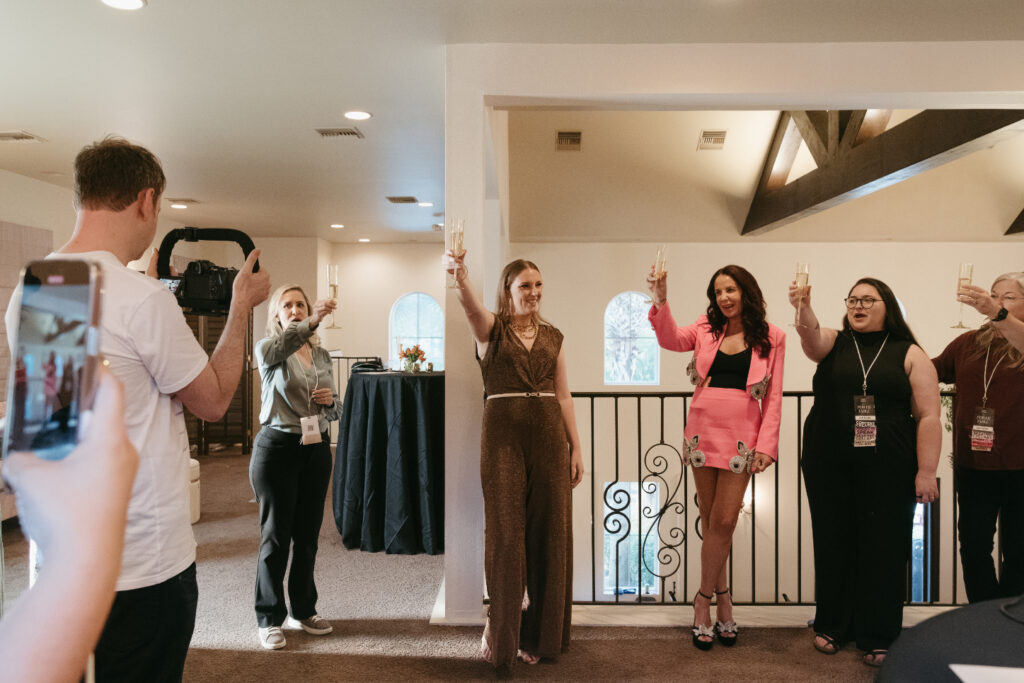
Hosting High Quality Events with Integrity
Events don’t just serve attendees. They involve and serve speakers, sponsors, volunteers, vendors, community partners and many others.
And, it is important to remember that as an event host, every action you take and every decision has a direct impact on not only every one of those people but their families and clients. The time and resources they put into your event are assets they actively chose not to put elsewhere, which means you have an ethical responsibility to ensure that everyone from attendees to stakeholders receives the experience and outcomes you promised them in your marketing.
“Communication is Queen, and this applies to any type of service, offer, or experience but especially events. The best thing you can do is try and anticipate what questions people may have and answer that before they have it. So for example, communicate the agenda of your event, how attendees can be intentional with their time, where to park, where to go, what to wear, etc.
This also applies to every stakeholder. There are vendors, volunteers, sometimes there are brand partnerships, and speakers. There are many different people in your event ecosystem that help you pull an event off successfully and you have a responsibility as an event host to make sure that they know where to be, how to participate, what’s acceptable and what’s not, what you expect from them, what they can expect from you, where to go, and what will happen.”
-Steph
“Sharing an agenda ahead of time is about respect, not logistics.
When hosts withhold even a general schedule, it signals a lack of trust in both the attendees’ time and the strength of the experience itself. Respect looks like transparent timelines, clear expectations, and naming what support exists on-site. When people know what they’re walking into, trust is built before they ever arrive.”
-Jordan Gill, Systems Strategist, Educator, Podcaster, & Founder of Systems Saved Me
“There are a few things that I do to start the experience of a retreat or dinner beforehand. My goal is connection and building relationships so I curate opportunities before the event or the retreat begins so that everyone can meet each other beforehand and connect. We all have been to events where it can be awkward or we are nervous to go and talk to others; so I provide a guest list and/or a group chat whenever it makes sense so connections can be made before the event. The tangible things will need to make sense based on what the goal of the event is. Connection for me is key and community is one of the goals so anything that I can do to increase that beforehand versus just relying on the event itself.”
– Lauren Najar, Agency Founder, Business Consultant, Speaker
“The best approach is designing your event around what you can guarantee, not what you hope will happen. Clear communication, strong boundaries, and transparent updates build far more trust than big promises that rely on too many moving parts. Ethical leadership means selling the experience as it is, not as a future version that may never materialize.”
– Michelle Thames, Event Host, Marketing Strategist, & Community Builder
As Steph says, this attention to detail is not only your responsibility as an event host, but it also makes you memorable. It makes people want to come back to your event and recommend your event the entire year until it comes again, which then means that your marketing gets easier every year because people are marketing for you in rooms that you’re not in.
The benefits are so far reaching and her advice to event hosts is to slow down and anticipate what people need to know and tell them these key details before they ever even know that they need to know it.
“It takes hundreds of hours of planning each year for Power Table LIVE because of the care and intention and responsibility I feel to deliver on our promises to all stakeholders involved.”
-Taylor
At The Power Table LIVE, there are a lot of great ideas we have but many of them we don’t act on because our number one priority is delivering on our promises. Sometimes it might take us a couple of years to build out an experience we’re dreaming of, not because we don’t want to do it sooner but because we’re not willing to rush the process and compromise the experience of any of our stakeholders.
Great hosts:
- Anticipate needs before questions arise
- Set clear expectations early
- Use project management systems
- Hold deadlines with care and firmness

When Mistakes Happen with an Event (Because They Will)
Perfection isn’t the goal when hosting an event. Leadership is.
Mistakes will happen, they are inevitable, especially the more your event grows and more complex the planning and execution is.
“Own it. Effort and care matter more than perfection.”
-Steph
Certainly at The Power Table LIVE, we’ve had mistakes made. Sometimes emails didn’t get sent, or I (Taylor) gave someone the wrong time, I forgot to attend a call, or pass on a piece of information. We’re all human and mistakes happen, but because events cost such a significant amount of time and resources for not only yourself but all of your attendees and stakeholders, it’s your duty to treat everyone with respect and take responsibility for mistakes.
“Start with how you want people to feel when you make a mistake — then act from there.”
-Taylor
The wrong moves generally come from a lack of planning, boundaries, and clear communication. I’ve seen event hosts develop a bad reputation very quickly because they promised something and didn’t deliver and, quite frankly, didn’t care about the negative impacts it had on not only their stakeholders but their attendees. That’s different from an honest mistake.
When you or your team has made a mistake, an ethical and responsible event host will prioritize owning the mistake and finding a solution that works for the stakeholder.
Best practices:
- Own the mistake quickly and don’t blame others
- Communicate clearly
- Offer solutions that work for the client or stakeholder
- Treat it as the cost of doing business (you might have to eat the cost of a refund, buying additional supplies, or paying for additional support)
Supporting Women in the Event Space When Values Don’t Align
This is the most nuanced — and often misunderstood — part of the conversation and one we’ve rarely seen talked about publicly, which is why we wanted to include it.
In the women’s entrepreneurship space, we talk a lot about community over competition. We encourage mutual support. We celebrate visibility, collaboration, and women helping women. Collective wins are all our wins. And in many ways, that culture has created opportunities that didn’t exist a decade ago.
But there’s a quieter, harder question underneath all of that:
What does support look like when your values don’t align with another women’s event, a business, or a leader?
As someone who has been in the event space as an attendee, a speaker, and a host for years, I (Taylor) can unfortunately say I’ve witnessed or felt so many bad experiences at events alongside so many good ones, and many of them I couldn’t have realized before being in the room.
But once I was in the room, I’d see really poor and disorganized events that were clearly just a money grab from the host, or an event that wasn’t centered around community and people felt clearly unwelcome, or as mentioned earlier in the article, blatantly unsafe and unethical practices such as preying on people with manipulative and emotionally-charged sales tactics or direct threats to physical safety.
And a question that would then come up for me was, “How do I handle this as a community leader with influence over others who will see my content from this event, and then consider attending themselves?”
And with that comes an incredible weight of responsibility, especially in the culture of women’s entrepreneurship where it can often feel like you owe it to other women to blindly support what they’re doing. So Steph and I dove into this topic and explored where we draw the lines and how we navigate the gray areas in this space.
As Steph articulated so clearly, values misalignment is not the same thing as unethical or fraudulent behavior — but ethics and safety are non-negotiable.
“Values are different from ethics. Fraud and safety issues are non-negotiable.”
– Steph
That distinction matters.
There are situations where values differ — tone, approach, faith, audience, business model — and those differences don’t automatically mean someone is doing harm. In those cases, support might still make sense if expectations are clear and alignment exists for the people being served.
But when misalignment crosses into deception, safety concerns, or a lack of integrity in execution, the responsibility shifts.
At that point, continuing to publicly support, promote, or attach your name isn’t neutral — it’s participatory.
And that’s where many community leaders, speakers, and hosts find themselves stuck.
Because support in this industry is often treated as binary: Either you support all women, or you support none. That framing is both unrealistic and dangerous.
“I believe you don’t have to support everyone in the same way.”
– Taylor
Support does not always mean amplification or promotion.
And it certainly does not mean putting other people at risk — financially, emotionally, or physically — because you didn’t want to disappoint someone or appear unsupportive.
Sometimes, support looks quieter for the event host who is still learning and has good intentions despite the missteps.
Sometimes it looks like choosing not to attend, not to promote, and not to comment — without creating spectacle or gossip around that decision.
Sometimes it looks like offering private feedback, if and only if it’s invited and appropriate.
And sometimes — especially when safety, fraud, or repeated lack of care is involved — support looks like stepping away entirely.
“The only way I can support someone in that situation is by helping someone do better — not by putting people in the room and putting my name on it.”
-Steph
There’s also an added layer of responsibility for those of us who host events, speak on stages, or lead visible communities. When we say we’re attending, speaking at, or endorsing something publicly, people follow us. They spend money. They take time away from their families. They walk into rooms trusting that we’ve exercised discernment.
Realizing that weight can be sobering.
“I’ve come to realize that my influence has grown to the point that the minute I post that I’m going to an event or speaking, someone in my community is more than likely buying a ticket because of it and that is a huge amount of responsibility. I owe it to my community to be careful and do my research first.”
– Taylor
That influence can be powerful when alignment is strong — and devastating when it isn’t. Which is why one of the most underappreciated forms of leadership in this space is discernment without drama.
Not gossiping.
Not publicly tearing someone down.
Not making yourself the moral authority.
But also not sacrificing your integrity, your reputation, or your community’s well-being in the name of performative support.
Silence, when used intentionally, can be a form of leadership. Choosing not to attach your name can be an act of protection for the people you serve.
Offering guidance privately — when welcomed — can also be generous leadership.
And recognizing that you don’t have to give everyone the same level or type of support is not selfish. It’s responsible.
This isn’t about being perfect.
It’s about being honest.
And it’s about remembering that the people affected by these decisions are not abstract — they are real women, real businesses, real families, and real sacrifices.
Supporting women doesn’t mean supporting everything women do.
It means supporting integrity, safety, and care — even when that requires difficult, quiet, or uncomfortable choices.

Final Thoughts: Raising the Standard Together
This conversation isn’t about tearing anyone down.
It’s about raising the bar — for hosts, speakers, attendees, and community leaders alike.
In an industry built on connection and trust, the cost of getting it wrong is real. People sacrifice time away from their families, money they worked hard to earn, and emotional energy to show up in rooms hoping for growth, opportunity, and alignment. That deserves respect.
“As women in business, we sacrifice too much to waste time, money, or safety.”
-Steph
As in-person events continue to grow in popularity, the responsibility attached to them grows too. Hosting a room isn’t just about selling tickets or filling seats — it’s about stewardship.
And attending isn’t just about being supportive — it’s about being discerning. And recommending an event isn’t just a casual share — it’s a signal of trust.
“I hope people feel empowered after this conversation to ask better questions — and say no when needed.”
-Taylor
Saying no doesn’t make you unsupportive. Asking hard questions doesn’t make you negative. Choosing not to attach your name doesn’t make you disloyal. These are signs of leadership — especially in spaces where influence carries weight beyond what we can always see.
The future of women’s entrepreneurship events won’t be shaped by bigger stages or perfectly aesthetic content marketing. It will be shaped by integrity, clarity, and care — by leaders willing to design experiences responsibly and participants willing to engage thoughtfully.
And it starts exactly here: with honest conversations, quiet discernment, and a shared commitment to do better — together.